
Gianina Schwanecke | 8 October 2026
https://www.rnz.co.nz/news/business/1787388/agriculture-industry-slow-to-take-up-new-ai-tech
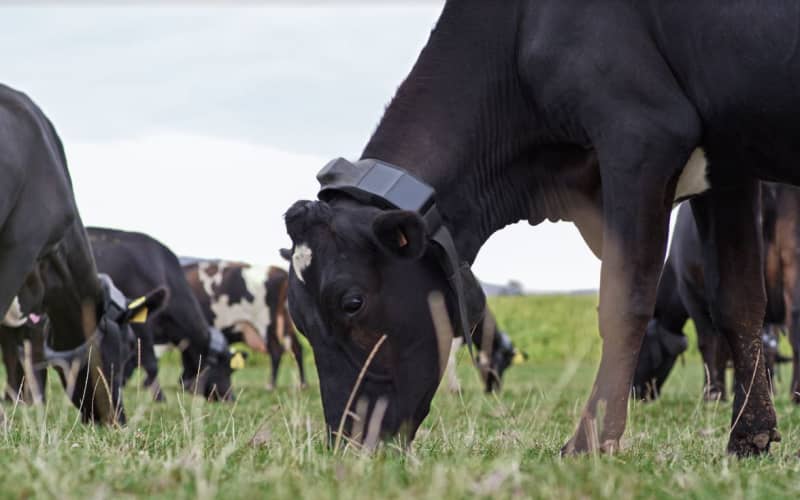
New Zealand’s primary industries are believed to be one set to benefit from Artificial Intelligence (AI) advances, but new research from Amazon Web Services (AWS) suggests the industry’s also one of the least prepared to take it up.
AWS research found AI adoption across agriculture, forestry and fishing sits just under 40 percent, compared with 50 percent nationally, and the majority of adopters are at the “most basic stage”.
It found physical AI – including robotics, autonomous systems, and computer vision – offers the most opportunity for the industry in relation to crop management, livestock monitoring and processing.
Yet only 30 percent of agricultural businesses have heard of it and just 7 percent of those are using or piloting it. Only 9 percent consider themselves ready to adopt next-generation AI tools.
A shortage of AI and digital skills, as well as other business priorities taking precedence and limited access to next generation AI tools or infrastructure were considered the greatest barriers.
AWS country manager for New Zealand Manuel Bohnet said the biggest barrier comes down to skills.
“Only 10 percent have really moved to an advanced usage and this is where you also really get most of the value out of it – use of agentic capabilities, or robotics or physical AI.
“We really see that there also needs to be more confidence built, and we truly believe that confidence is a consequence of skills and having a better understanding.”
It’s why AWS is running a free agritech school to upskill those in the primary industries.
Lone Star Farm’s stock manager Carey Pawson-Edwards said its five South Island sheep and beef farms used over 30 apps or programmes, which had helped improve productivity.
He said there had been a big shift in how farmers trust data as the results had been proven, with more keen to get on board now.
In addition to productivity gains, he said there were environmental and animal welfare benefits.
“Practically on farm we’re underway with Halter virtual fencing. Halter collars versus non-Halter collars with cows and calves at foot we’re increasing the ME (metabolisable energy) of our pasture by roughly 1 to 2 after 30 days and we’re 10 kilos heavier in our weaning weight.
“Across the whole company we’ve got all of sheep have got electronic tags within their ears. Not only are we seeing production gains from that where we can see how animals are performing and do things about it, but we’re also able to supply a lamb programme called Lumina Lamb, and that’s enabling us to extract a premium out of the market for those lambs and EID (electronic identification) traceability is one of the requirements of that.”
Pawson-Edwards said for farmers it was about seeing a return on investment.
Going forward, he wanted to see more integration across the various apps to grow their benefits.