
Andy Castillo | October 17, 2026
https://www.farmprogress.com/farming-equipment/farming-s-wild-west-requires-early-tech-adoption-over-hesitation
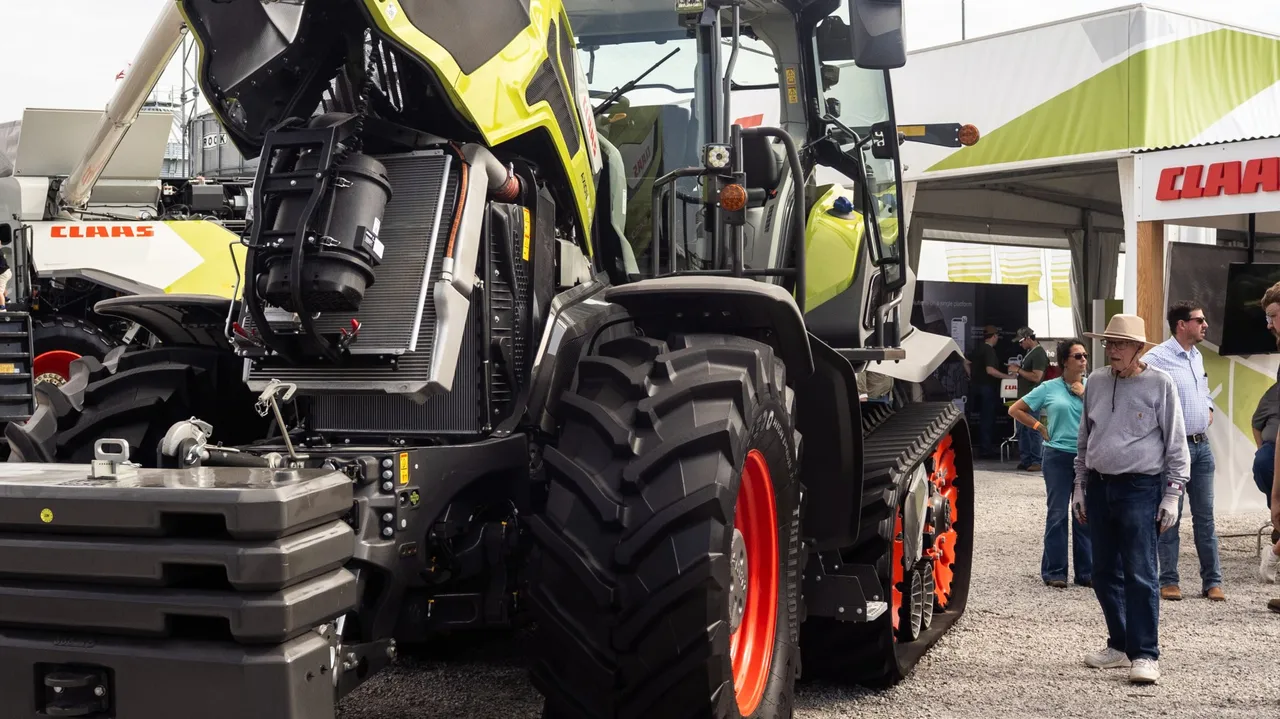
Modern farm technology is on display at the 2026 Farm Progress Show. Artificial intelligence and advanced machinery are rapidly transforming agriculture and challenging farmers to adopt them or risk falling behind. Andy Castillo
Illinois farmer Steve Pitstick can remember blasting an AM radio on the fender of his father’s tractor while rumbling across guess rows.
“Mom could hear me in the dooryard, but I couldn’t hear it sitting on the tractor,” Pitstick recalled while perusing the latest ag tech at this year’s Farm Progress Show in Boone, Iowa.
Farm technology has changed a lot since AM radios and open-air cabs of the last half-century. Today’s tractors boast more than 800 hp. Their interiors look like cars. Drones spray crops out in the field, and artificial intelligence is revolutionizing office work.
Pitstick, who is in his 52nd year farming, is embracing change — even if it’s disconcerting.
“We’re in the Wild West. I’m leery; I’m not all in. But I think we need to look at it. It’s going to be part of our life,” he said.
Evolving with technology is nothing new for Pitstick. He has been collecting yield data since 1996, and immediately recognized autosteer’s value in 2004.
Related:New Case IH Nutri-Tiller 1000 has 16 rows, planter integration
Recently, Pitstick joined 15 other farmers working with an AI developer that’s building a model capable of monitoring crop operations, documenting hybrid planting dates, collecting weather data and reporting on growth stages.
“It’s pretty cool stuff,” he said about the AI’s capability, which he thinks will solve the challenge of tracking data across operations. “My dad was an early adopter; my grandfather was an early adopter of technology. So naturally, I look for the next thing.”
Artificial intelligence
U.S. farmers can take a page from Pitstick’s playbook. Global industry is rapidly evolving as AI streamlines inefficiencies. Given its reliance on data, farming isn’t exempt from its reach.
Doug Houser, digital ag specialist at Iowa State University Extension, expects change will happen sooner rather than later. He has seen technology overhaul practices once thought unchangeable.
“I still remember climbing up in a combine, and I had a bag phone at that time. I had a farmer look at me and say, ‘Well, that’ll never replace my two-way radio. You wasted your money,’ ” Houser said.
Compared to other revolutionary technologies like autosteer, Houser expects AI’s adoption to happen much faster because its return on investment is clear. What does that mean for farmers?
“My recommendation for farmers is to understand the technology. Don’t get left out if there’s an option to get into a trial,” he said. With drones, “get some acres sprayed because you’re not going to believe in it until you have it on your acres. Then maybe take the next step.”
Related:Allis-Chalmers D21: Pioneering the modern tractor cab era
Tomorrow’s farmers won’t be replaced by AI, but by their neighbor who has embraced it.
Pitstick predicts AI systems will give adopters a leg up by completing practical tasks such as providing alerts for herbicide application windows based on weather, growth stage and product cutoff dates. With margins thinner than ever, every second counts.
“Don’t be afraid of it, embrace it. You don’t have to use it in your operation, but don’t keep it at arm’s length. Understand what it can or can’t do and prepare for it,” Pitstick said.