
John Lovett | Oct 6, 2026
https://www.farmtalknews.com/news/ai-helps-arkansas-researchers-target-bacteria-behind-premature-beef-browning/article_28c6fd6b-3230-4aef-be6d-6af75107db1a.html
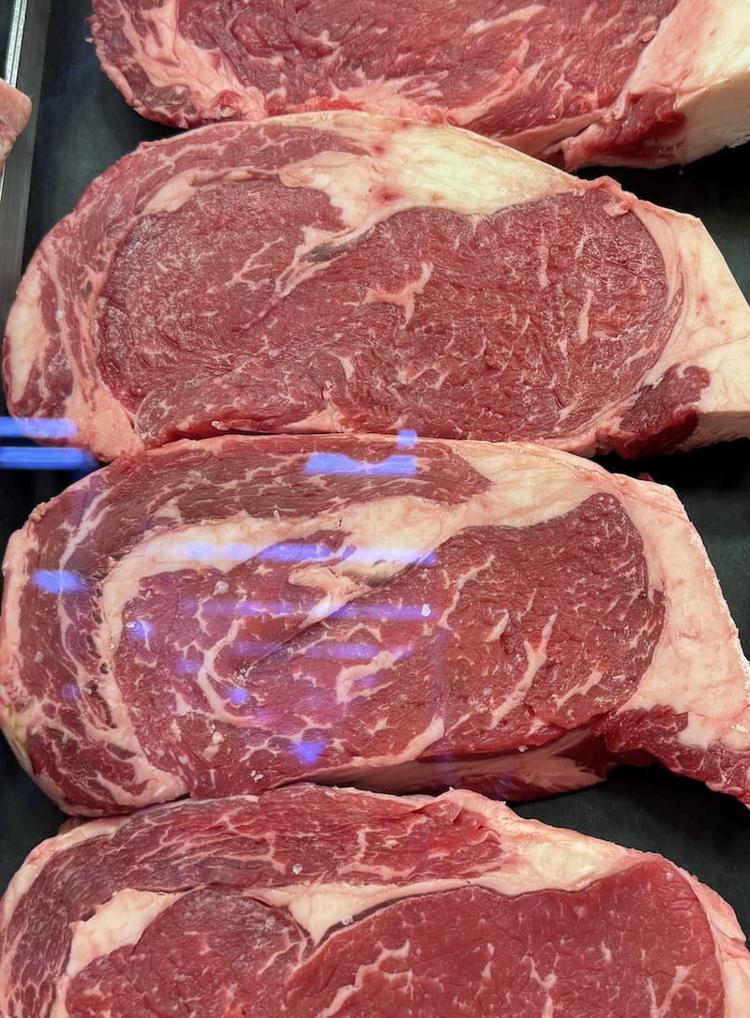
Arkansas Agricultural Experiment Station researchers in the Department of Animal Science are using artificial intelligence and existing DNA data to identify beneficial bacteria that may be candidates for future clean-label preservation research. (UADA photo)
One of the beef industry’s most costly challenges is invisible to the human eye but costs billions of dollars each year.
Every year, the U.S. beef industry loses an estimated $3.7 billion from beef that is discounted or discarded because it turns brown before its sell-by date, even though the product is likely to still provide a good eating experience, according to the Arkansas Beef Council.
Researchers with the Arkansas Agricultural Experiment Station, the University of Arkansas Division of Agriculture’s research arm, are working to change that in a year-long project funded by a $20,000 grant from the Arkansas Beef Council.
Aranyak Goswami, an assistant professor and computational biologist, and Derico Setyabrata, an assistant professor of meat science and muscle biology, are using artificial intelligence and existing DNA data to identify bacteria that influence how long fresh beef maintains its bright red color.
The machine-learning approach allows the researchers to examine complex microbial patterns across samples and rank the bacterial signatures most consistently associated with beef color stability.
“Our project is taking a fresh approach to this old problem,” Goswami said. “We know that the invisible world of bacteria on beef at the time of packaging plays a big role in how long it stays red and appealing. What we don’t yet know is which specific bacteria consistently track with better or poorer color stability and may ultimately prove to be the ‘heroes’ or ‘culprits.’ That’s exactly what this research will find out.”
Both researchers are part of the Department of Animal Science in the Dale Bumpers College of Agricultural, Food and Life Sciences at the University of Arkansas. Goswami is also a faculty member at the experiment station’s Center for Agricultural Data Analytics and in the Department of Poultry Science.
Seeking Natural Solutions to Maintain Beef Freshness
The goal is to build what Goswami and Setyabrata call a “Freshness Hit List,” a ranked list of five to 10 bacteria that would provide candidates for subsequent validation and future clean-label preservation research.
Setyabrata said the clean-label preservation uses beneficial bacteria already present in beef, rather than synthetic chemicals, to extend shelf life.
“That’s exactly where the market is heading,” Setyabrata said of clean-label preservation. “This project gives us an opportunity to better understand the biological factors that are associated with beef color stability and support future development of natural methods for preserving product quality, reducing waste and improving value throughout the beef supply chain.”
The $20,000 investment by the Arkansas Beef Council will generate preliminary data that could support larger federal proposals to validate and expand the research, Goswami said.
“Research like this demonstrates the power of combining animal science, data analytics and industry partnerships to solve real-world challenges,” said Michael Looper, head of the Department of Animal Science. “We are proud to support innovative work that improves beef quality, reduces waste and enhances value across the supply chain.”
The Arkansas Beef Council received 25 proposals requesting more than $632,000 in funding from April 1-30. Of those, 13 promotion projects were approved for a total of $97,000. The council allocated $35,000 for research projects in fiscal year 2027, with specific research projects selected for funding through the council’s review process.
“We are grateful for the council’s partnership and look forward to delivering results that make a real difference for Arkansas producers,” Goswami said.